Wednesday, 21 March 2018

Robert Smithson - Research documenting space

Robert Simthson was an American artisit who presented sculpture and land art mainly using the medium of photography. He initially defined himself as a painter regarding his early work. From 1964, he became a proponent of the emerging 'minimalist' movement. Smithson's interest in 'temporal' is explored through the rediscovery of the idea of 'picturesque' and he recovers the issues of 'site specificity' and' human intervention' as dialectic landscape layers, experiential multiplicity, and the values of deformations manifest in the picturesque landscape.
By re-interpreting and re-evaluating anti-aesthetic and anti-formalist logic, Smithson was able to broaden the temporal and intellectual context for his own work, and to offer renewed meaning for Central Park as an important work of modern art and landscape architecture.

Spiral Jetty is an earthwork sculpture constructed in April 1970, considered to be his central and most notable work. Smithson documented the construction of the sculpture in a 32-minute color film also titled Spiral Jetty.

Image result for robert smithson
Spiral Jetty

Image result for robert smithson
Spiral Jetty

Image result for spiral jetty
Spiral Jetty

Thursday, 14 December 2017

Documentary: the film and a self evaluation


This is the film we made


Unfortunately I had to reduce the quality of the video, to be able to upload it here, because the size of the file was too big. 

The editing was done by Aaron, with Richard helping him, in the decision making about the structure of the film.
I proposed to decide all together which scenes to put into the movie, because we all had an equal part in the making, and then they would make the final edit, but unfortunately nobody agreed with the idea. 
So at the end unfortunately I couldn’t  have any part in the decision making about the final content of the movie and I couldn't even see the movie before the presentation in the class.

I’m happy though about the respond of the people we have interviewed. They have been very friendly with us.


It gives the idea of a community when the people talk about their positive and negative opinions about Farnham. It shows that they actually care about the place and the people where they live.


If I have to be honest I don’t like the final edited version and what they have decided to put or not put in the movie. I think it’s a bit of a mess. Even the quality of the audio and the darkness of some pictures it’s bad.


I think It’s a shame, even because I often proposed during the shooting to filming in a place with more light or to start shooting earlier in the day to have more time and more light, but no one in the group agreed with my ideas on that.

It has not been easy for me to work with my group, because our different opinions, different life background and our different personalities.

The lack of communication within the group has been the more difficult part for me.
We should have talk together more about our ideas in every part of the process, from the pre-production to the editing. 
I think that that has compromised the result of the film in particular.


Even the fact that some components in the group were mentally stuck in their roles in the film, didn’t helped I think. It kind of created a barrier from let everyone feel completly free to always share their ideas. 


Actually at the beginning I even proposed to share our roles, with everybody deciding things together, but my group mates didn’t agree.

I have to admit that the tension that I created, because of my strong disagreement with the behavior of some group mates, didn’t make it easier to work.


I knew that it would have been a challenge from the beginning. But I’m proud of having been able to go through this challenge and finishing the movie.


I consider the final result, the film, a failure, but the process of making it has been very formative.


I learned a lot about the filmmaking process and how to deal with colleagues in a film crew.


In the future I will try to not make the same mistakes again.


I even learned new technical skills, like how to use a movie camera, how to edit with the Premiere Pro software, how to use proper a microphone and I improved my interview skills.


Labels:

Documentary: the shooting process


During the shooting week, our idea about the film has shifted from just asking to people in Farnham if they had something to get out of their chest, to ask them as well what makes them happy (I got the inspiration from “Chronicle of a summer” where they ask to people in the street if they are happy).

Then we even decided to put a self-reflection about our documentary and the making process in the film. 

We have done it by showing ourselves during the shooting, during our conversations about the making of the project, and by interviewing our self as well. 

To create a bigger sense of community in the film, we even decided to ask to people and to ourselves questions about Farnham, like “you like Farnham”, “what you like and what you don’t like about it”. 

We divided the shooting in five days. 

_ On the first day we went to shoot in the big car park near the Gostrey Meadow Park. We chose that place because is kind of quiet, far from the main roads but there are still people walking by. 

We then realized that the first interviews that we shoot, had no sound recorded. We then decided to put this into the movie, because was part of the process of our documentary experience.

Then we filmed in our class in the University, a conversation we had between us (our group), about the making of our film, to use it as a self-reflection.

Actually during the shooting our roles have been mixed, because we all (apart from Aaron) did some interviews and we shared to one time each, the sound engineer role.


 _ The second day we have filmed in the Gostrey Meadow park in Farnham,  to make some interviews in a more relaxed environment, like a park. We were happy about the people’s  reactions and opinions in the interviews. It has been quite easy to find people available to be interviewed.

 _ The third day was a nice sunny day, perfect for the shooting.
We have chosen a pretty street, with a nice background, like Castle street to make some interviews.


Then we even interviewed the owner of the flower shop at the corner of the same street.Then we went in the Oxfam charity shop in East street, where we interviewed a clerk lady and a customer of the shop. The interview with the clerk lady is my favorite by the way.


 _The fourth day we did some shooting near the St. Andrews church, because of the nice and calm location.


We even did some self-reflection interviews in our group. This time, we were one at the time in front of the camera.


 _And on the last day we did some more interviews in that narrow walking street, that goes from the Waitrose supermarket  to Castle street, passing in front of the “Hop Blossom” pub. The background with the old wall was quite interesting. 

Then we did some interviews in the back of the Waitrose building, which I disagreed with, because I didn’t like the background.


Labels:

Documentary: pre-producton

In our first meeting as a group for this project, we did some brainstorming about our ideas and we discussed about them.

We then decided that the best idea was the one of Richard, to take inspiration from the documentary film "Chronicle of a summer".

It's a French documentary from 1961. Shot during the summer of 1960 by the sociologist Edgar Morin and the anthropologist and filmmaker Jean Rouch.


I watched the film and I really liked.

It’s made with a group of real-life people, that are led by the filmmakers to discuss topics on the themes of French society and happiness in the working class. 

It even has some pop vox interview from the streets of Paris. 

It is also widely regarded as an experimental and structurally innovative film. 

An example of cinema vérité and direct cinema.

So the first idea of Richard was to interview people in the street and ask them if they would like to get something out of their chest, by talking about something they don’t like in their life or in general.

To relate this with the topic of the community, which is the topic given from our tutor for the documentary, we decided to shoot it just in Farnham, so it will represent the community of Farnham.

We then decided our roles in the movie:
Richard as director, Jasper as producer, Aaron as editor and me as camera operator.


Labels:

Thursday, 23 November 2017

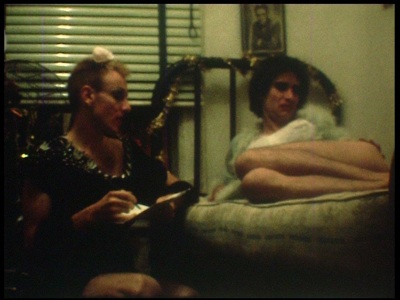
Portrait research - Inspirations (Mark Morrisroe)


Mark Morrisroe

as well inspired me for the "half man-half woman" shoot. 

I saw his work first, as well in the book "Train your gaze" from Roswell Angier.


Image result for mark morrisroe drag queen


Born to a drug-addicted mother in Malden Massachussetts, Morrisroe left home and began hustling under the name Mark Dirt at the age of 15. 

His mother was a tenant of Albert DeSalvo, who would become known as "the Boston Strangler", and Mark often told people he was DeSalvo's illegitimate son. 

When he was 17 years old, a disgruntled client shot him in the back, leaving him with a bullet lodged next to his spine for the rest of his life. 

The experience had a profound influence on his art, which often incorporated images of young prostitutes and X-rays of his injured chest.

Related image     Related image


While attending, he performed as a drag character of his own creation, Sweet Raspberry, and co-founded a zine called" Dirt Magazine" with his friend Lynelle White, distributing it in Boston nightclubs. 

This zine was composed of fake news and gossip about celebrities, bands and other famous people, mostly from Boston.

                 Related image

His career as a photographer began when he was given a Polaroid Model 195 Land camera. 

He experimented with unusual development techniques, receiving generous support of supplies, film, and chemicals from the Polaroid Corporation. 

Image result for Mark Morrisroe

Within his close circle of friends he soon laid claim to the "invention" of what are called "sandwich" prints, enlargements of double negatives of the same subject mounted on top of one another ,which yielded an elaborate pictorial quality, producing a very iconic painterly impression in the final result, which over time he learned to use in an increasingly controlled way.


                       Image result for mark morrisroe

Early on, the artist recognized the intrinsic value of prints,irrespective of the medium used to produce them,as pictorial objects that he could manipulate, color, paint, and write on at will. 

Thus, Morrisroe scrawled comments, biographical notes and dedications on the side of his pictures, which made them very personal pieces of art. 

His photographs were mostly portraits, and his subjects included lovers, friends, hustlers, and people who visited his apartment. 

He also often incorporated stills from Super 8 films. 


                                Image result for mark morrisroe

Morrisroe died on July 24, 1989, aged 30, in Jersey City, New Jersey, from complications of AIDS. His ashes are scattered in McMinnville, Oregon, on the farm of his last boyfriend, Ramsey McPhillips. 

His fame has increased steadily since his death. 

He is considered a member of the New England School of Photography and his work is found in many important collections including that of the Whitney and MOCA of Los Angeles.

Labels:

Portrait research - Inspirations (Lyle Ashton Harris)


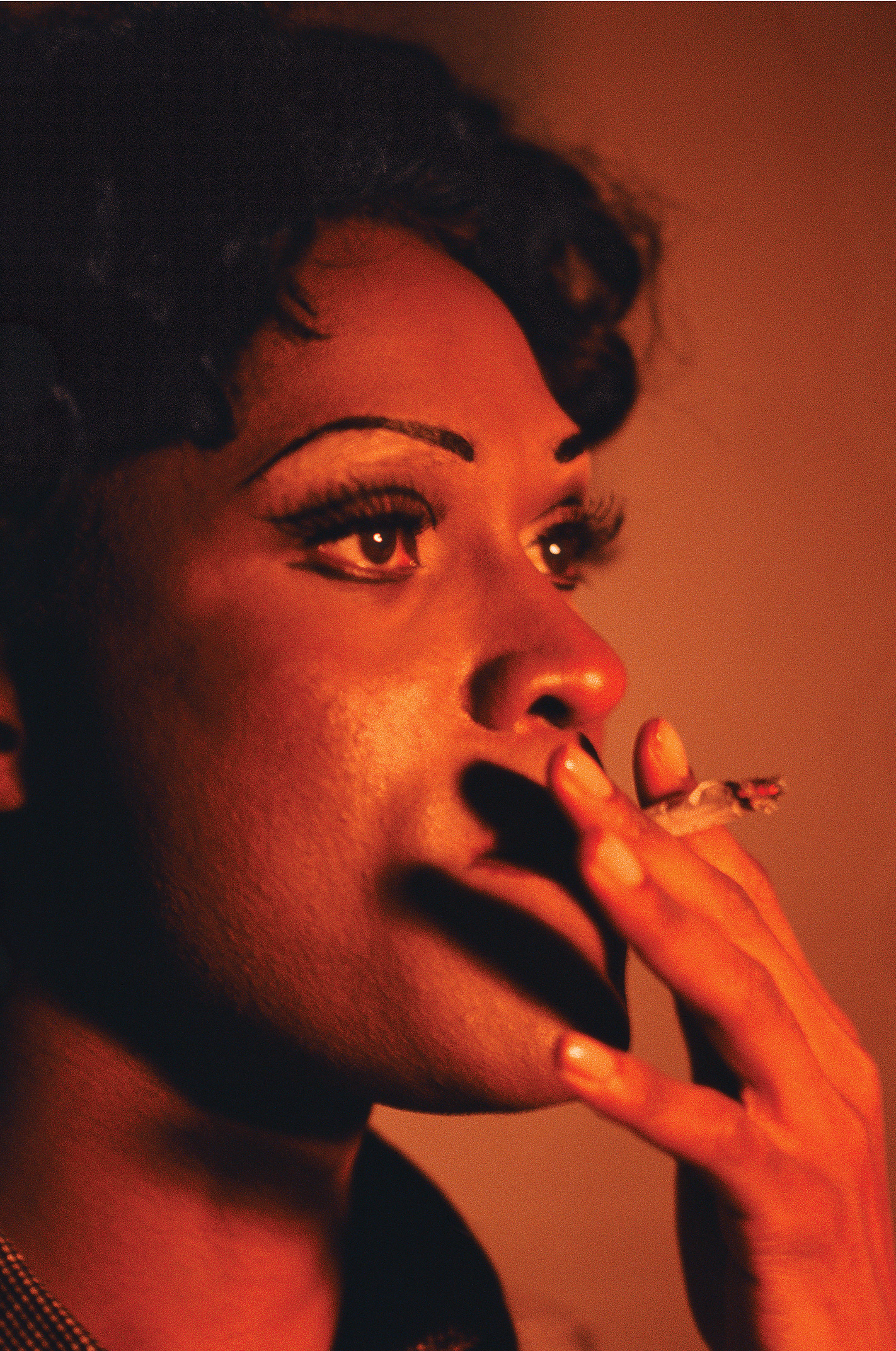
Lyle Ashton Harris

gave me the idea for the second shoot "half man-half woman" for my Portrait project. 

I first saw his pictures in the book "Train for gaze" from Roswell Angier.

Image result for lyle ashton harris photography

Lyle Ashton Harris (born 1965, New York) has cultivated a diverse artistic practice ranging from photographic media, collage, installation and performance. His work explores intersections between the personal and the political, examining the impact of ethnicity, gender and desire on the contemporary social and cultural dynamic. 


Related image


Known for his self-portraits and use of pop culture icons (such as Billie Holiday and Michael Jackson), Harris teases the viewers’ perceptions and expectations, resignifying cultural cursors and recalibrating the familiar with the extraordinary. 
Related image

Harris has exhibited work widely, including at The Solomon R. Guggenheim Museum (New York) and The Whitney Museum of American Art (New York) among many others, as well as at international biennials (São Paulo, 2016; Busan, 2008; Venice, 2007; Seville, 2006; Gwangju, 2000). His work is represented in the permanent collections of major museums, most recently The Museum of Modern Art, New York. In 2014 Harris joined the Board of Trustees of the American Academy in Rome and was recipient of the David C. Driskell Prize by the High Museum of Art (Atlanta, Georgia, U.S.A.). 

Image result for lyle ashton harris photography

In 2016 he was awarded the John Simon Guggenheim Memorial Foundation Fellowship and was appointed a trustee of the Tiffany Foundation. Having studied at Wesleyan University, the California Institute of the Arts, and the Whitney Museum of American Art Independent Study Program, Harris is currently an Associate Professor of Art and Art Education at New York University.

Image result for Lyle Ashton Harris

Labels:

Portrait research - inspirations (Boris Mikhailov)


Boris Mikhailov

The work of Boris Mikhaivov was a big inspiration for my first shoot. In particular his series of self portraits of his work "I am not I" where he shows him self naked with big freedom and his work "Case history" where he shows the reality of the post-communist Russia. I discover his work in the book "Train your gaze" from Roswell Angier. This book has been very helpfull for most of my researches.


Related image


Born in the former Soviet Union, Mykhailov lived and worked for several decades in his hometown of KharkivUkraine. He received an education as an engineer and started to teach himself photography. Today he is one of the most successful and well-known among the photographers who were already active in the Soviet era. His work combines conceptual art and social documentary photography.                                         

Image result for boris mikhailov


Mykhailov had his first exhibition at the end of the 1960s. After the KGB found nude pictures of his wife he was laid off his job as an engineer and started to work full-time as a photographer.

Related image

In “I am not I,” Mikhailov’s body is alone in front of the camera, where he performs a perverse adagio with props ranging from sword to dildo to enema. The setting is bleak and provisional: flooring nailed together before a black velvet backcloth that cannot cover the entire frame. The sad-clown character of Mikhailov contorts himself into positions of resplendent nudity

Related image His most famous work though is "Case History". It is considered an important part of contemporary art.

There he examines the consequences of the breakdown of the Soviet Union for its people. 

He systematically took pictures of homeless people. 

It shows the situation of people who after the breakdown of the Soviet Union were not able to find their place in a secure social system.

Image result for boris mikhailov self portrait naked   Related image     Image result for boris mikhailov self portrait naked    

What impressed me most about these pictures is that even if they are staged, they give a big sense of reality. 

And reality is what I wanted to show most in this shoot for my project.

              Related imageImage result for boris mikhailov

In a very direct way Mykhailov points out his critique against the "mask of beauty" of the emerging post-Soviet capitalistic way of life.


Labels:

Portrait research - inspirations (Jen Davis)


Jen Davis


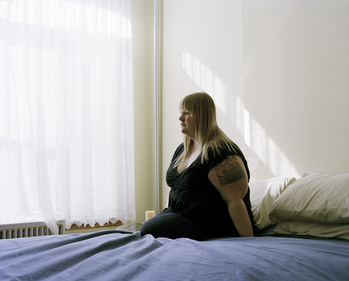
"Eleven Years" from Jen Davis, is a book that inspired me for my first shooting,

It's a series of self-portraits where the photographer shows her daily life and how she could feel isolated from the society because of the size of her body. 

I related it with me, because depression can have the same effect of isolation.

In Jen Davis's photographs, the familiar experiences of daily life (shower, meals, clothes and embraces) are rendered as elemental forces and drives: water and light; nuorishment and warmth; dwelling, coupling and surviving.

Image result for jen davis eleven years

The woman in these pictures is a complex character, but not because she is dressing up or acting out. She is, by her nature and the nature of her presence, someone who charges the most banal activities and placid rooms with drama and consequence.

Image result for jen davis eleven years review

The artist said about this project: "In this body of work, I deal with my insecurities about my body image and the direct correlation between self-perception and the way one is perceived by others" 

Image result for jen davis eleven years

Overweight from an early age, Davis knew no different, but by 2002, she began to reflect on her life, telling her story through photographic self portraits, revealing her thoughts and opinions about the society in which we live—a society that dictates beauty based on one’s physical appearance. Originally employing a 4 x 5 view camera, she bravely turned the lens on herself, exploring not only her own insecurities, but also addressing broader societal standards of beauty, and how those rigid strictures impact individual lives. Challenging traditional expectations of female representation, the series continued for eleven years as Davis completed a BFA program at Columbia College Chicago and an MFA program at Yale University in New Haven before moving to New York City. 


Image result for jen davis eleven years

Davis’ eleven year’s of reflection and introspection expertly bring into focus everyone’s passing sorrow and loneliness, in addition to our common moments of self-doubt and sometimes suffocating fears of inadequacy. Jen Davis’ story is both a personal one and something strikingly universal.

Image result for jen davis eleven years


Labels:

Portrait research - inspirations (Francesca Woodman)


Francesca Woodman


is one of the artists that inspired me for my first shoot. 

By looking at her work, I got the courage to show my naked body.


For this research I used the book "Francesca Woodman" edited by Corey Keller.


Image result for francesca woodman

In less then one brilliant decade, Francesca Woodman produced a singular body of work. Haunting and intimate, direct and visceral, her photographic explorations represent the unusually coherent vision of an artist who had barely entered adulthood.


Woodman's preferred subject was herself: from the first time she picked up a camera as a teenager, she used it to thoroughly plumb the genre of self-portraiture.

Image result for francesca woodman photography

In 1981, at the age of twenty two, she committed suicide. The untimeliness of Woodman's demise is underscored by startling sophistication and artistic resolution of the body of photographs she produced during her short career.

Image result for francesca woodman photography

She might be merely a tragic footnote in the history of photography were it not for the compelling, complex, and artistically resolved body of work she produced in just nine brilliant years

Image result for francesca woodman photography

She was an artist decisively of her time, yet her photographs retain an undeniable immediacy.
Thirty years after her death, they continue to inspire a cultlike following of admirers drawn by the work's dazzling ambiguities and remarkably rich explorations of self-portraiture and the human body in architectural space.


Labels: